How AI Is Transforming Kenyan Businesses in 2026
See how Kenyan SMEs are using AI in 2026 — from WhatsApp chatbots to M-Pesa reconciliation — and how to start without a data science team.
How AI Is Transforming Kenyan Businesses in 2026
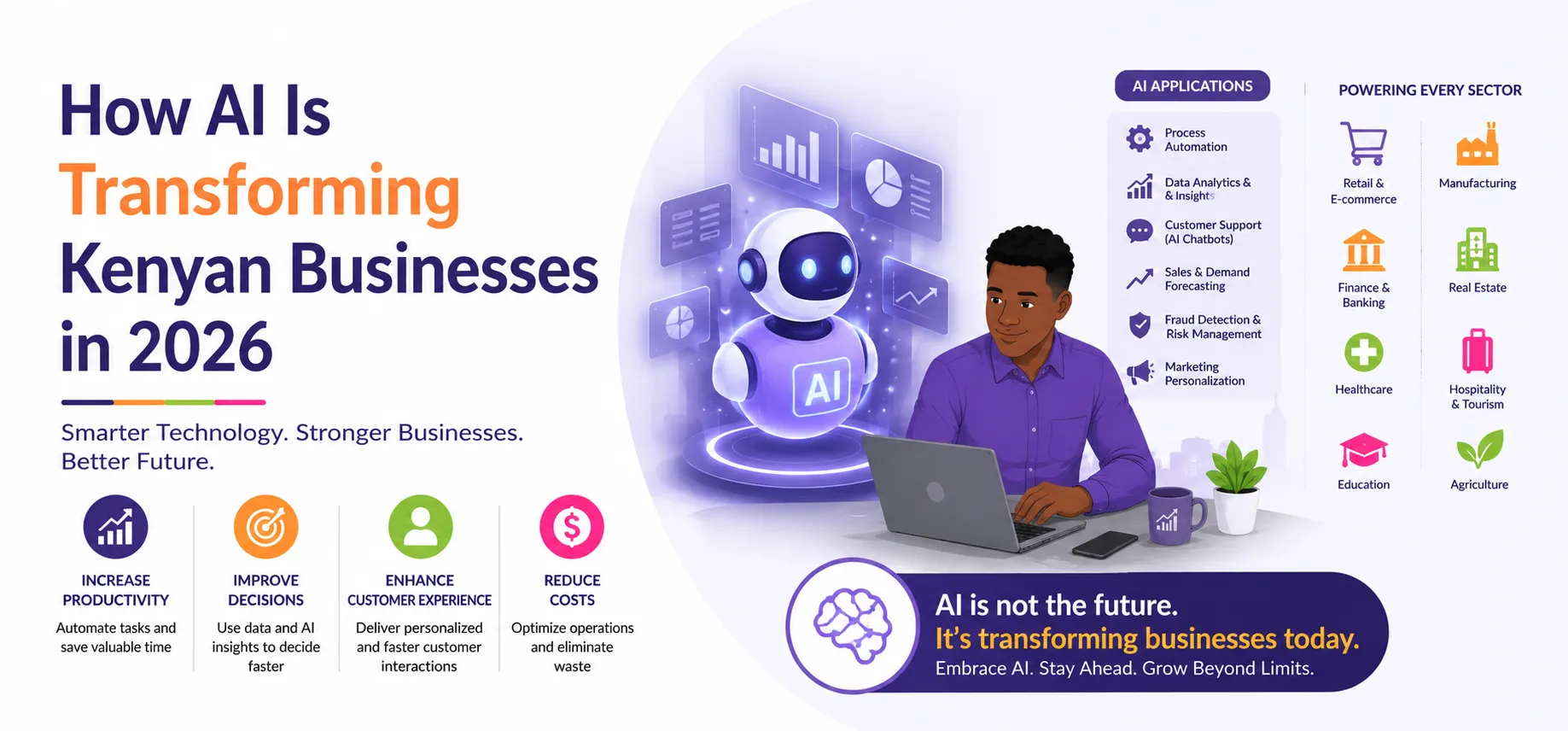
Artificial intelligence has moved from buzzword to everyday business tool in Kenya, and 2026 is shaping up to be a genuine turning point. Tools that once required enterprise-sized budgets are now within reach of a shop owner in Ngara, a school administrator in Nakuru, or a property manager in Kilimani. Here's what's actually happening on the ground — and how Kenyan SMEs are putting AI to work.
Kenya Is Leading, Not Following
It's tempting to assume AI adoption is a developed-market story first. The data says otherwise: industry commentators have noted that Kenya's AI uptake ranks among the highest in the world, reportedly placing first in a recent global AI usage poll — ahead of markets like the UAE, US, and UK. Small and medium enterprises are central to that story, contributing an estimated one-third to 40% of Kenya's GDP and acting as a natural testing ground for practical AI tools.
Why Kenya's Mobile-First Economy Is an Advantage
Kenya's AI story looks different from other markets because it's built on top of an already mobile-first population. With tens of millions of internet users and WhatsApp deeply woven into daily life, Kenyan businesses can deploy AI tools exactly where customers already spend their time — which means faster adoption and quicker, more visible results than in markets where AI tools require a separate app or platform.
Where AI Is Actually Delivering Results
1. Customer Service That Never Sleeps
AI-powered chatbots connected to WhatsApp Business can now handle product enquiries and pricing questions around the clock. Some Nairobi-based deployments report support ticket volumes dropping by as much as 80% after introducing a chatbot that costs less than a part-time employee's monthly salary.
2. Automated Invoicing and M-Pesa Reconciliation
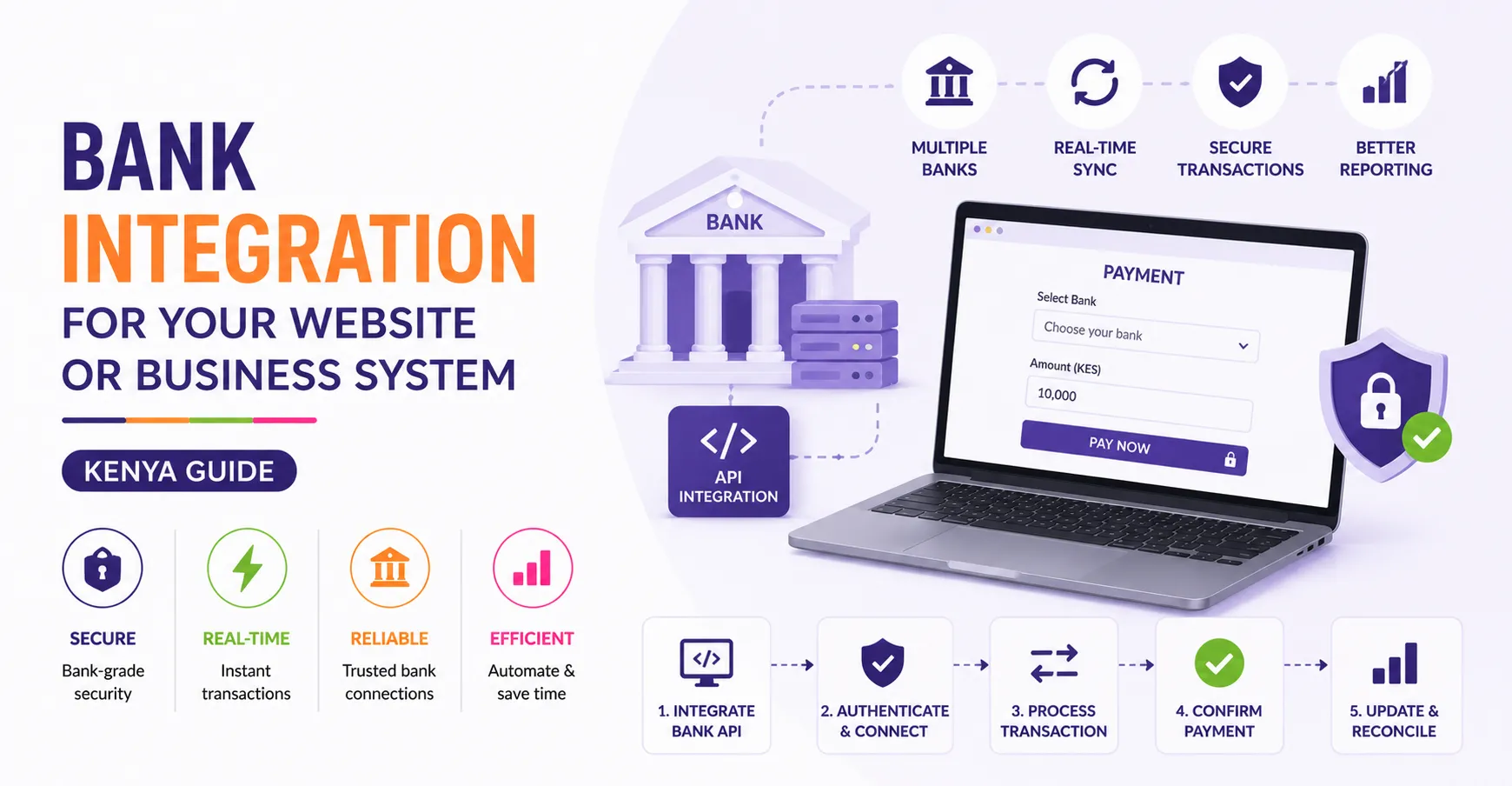
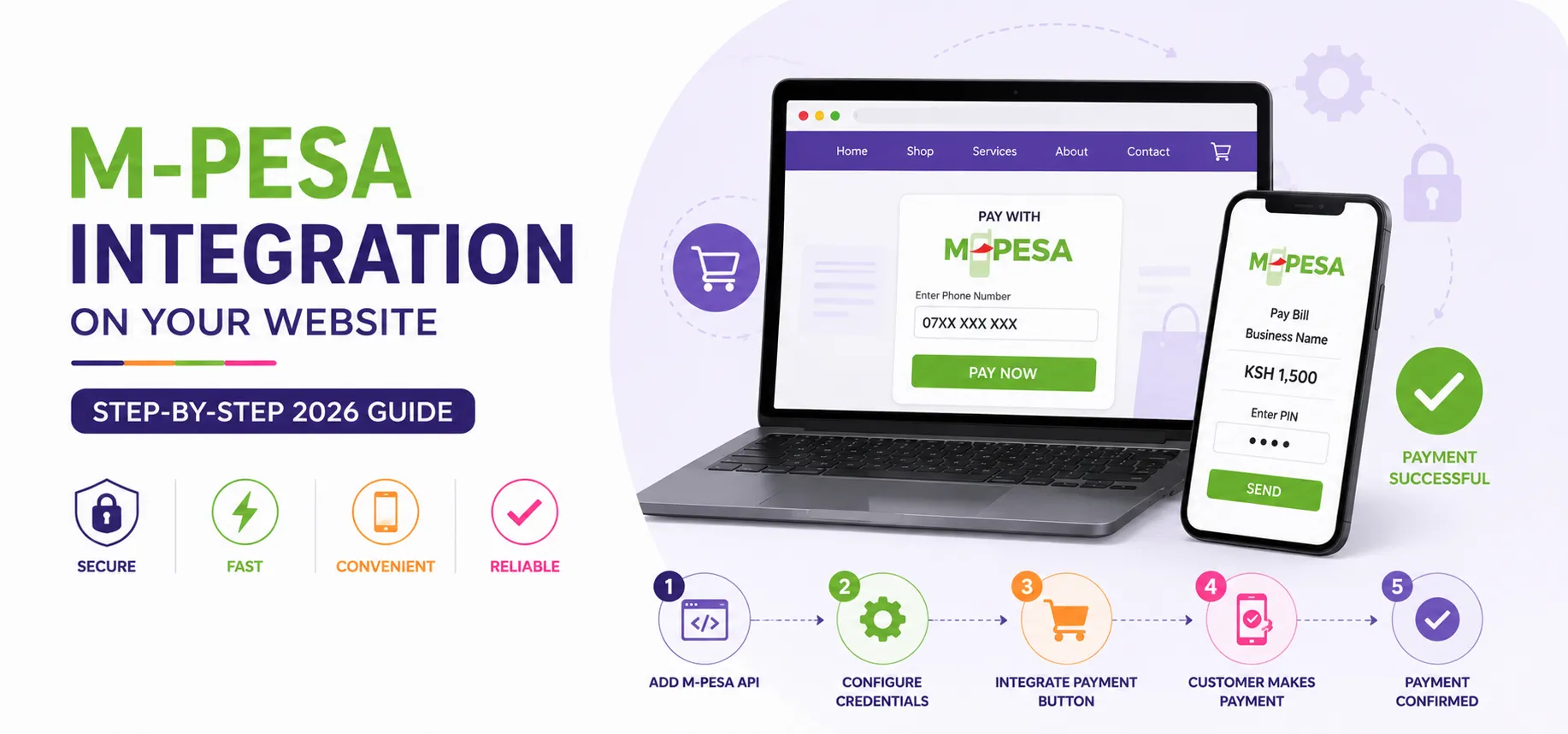
Matching M-Pesa payments to sales records used to eat up hours of finance-team time every month. By connecting the M-Pesa Daraja API to accounting software, businesses can auto-generate invoices on payment receipt, reconcile statements daily, and flag discrepancies automatically. Finance teams using this kind of automation have reported saving 40 to 60 hours a month, with far fewer missed or unmatched payments.
3. Smarter Inventory and Demand Forecasting
AI-driven analysis of historical sales data is helping retailers anticipate seasonal demand rather than react to it after the fact. By studying past buying patterns, AI can help a retailer predict seasonal spikes and stock the right products at the right time, cutting both stockouts and capital tied up in slow-moving inventory.
4. Marketing on a Small Budget
For SMEs without a dedicated marketing department, AI is narrowing the gap with larger, better-resourced competitors. It can process large volumes of customer data quickly, surface buying patterns, and help tailor campaigns — improving targeting and conversion rates even on a modest marketing budget.
5. Voice and Local Language Accessibility
One of the more exciting shifts for 2026 is the rise of voice-based AI that understands Swahili and other local languages, which stands to make these tools genuinely accessible to Kenyans who aren't comfortable typing in English — a meaningful shift for businesses serving a broad customer base.
Government and Infrastructure Are Catching Up
This isn't happening in a policy vacuum. Kenya's National AI Strategy is building frameworks to support business adoption, with declared focus areas including agriculture, healthcare, education, and industry, plus dedicated programs meant to help SMEs access training and resources. On the infrastructure side, Microsoft's planned East Africa data center is expected to reduce latency and cost for cloud-based AI services — a meaningful development for businesses currently paying a premium to run AI tools hosted overseas.
The momentum extends beyond policy papers. Earlier this year, the Nairobi AI Forum drew more than 500 participants from government, private sector, and innovation ecosystems across Africa, Europe, and the G7, with new commitments including compute access for 130 African innovators working on issues from climate resilience to food security.
The Economics Make Sense for SMEs
The return on investment is what's driving adoption, not hype. A well-deployed AI system can often do the work of several skilled staff members for a one-time setup cost that pays for itself within six months — a compelling proposition for cost-conscious Kenyan business owners operating on thin margins.
A Word of Caution
AI adoption globally is still uneven, and Kenya is no exception. Across major economies, SME adoption of AI still trails behind larger firms and behind adoption of other digital technologies — a reminder that access to tools alone doesn't guarantee results. The businesses seeing real returns are the ones that start with a specific, well-defined problem (an overloaded support inbox, slow invoice reconciliation, inconsistent stock planning) rather than adopting AI for its own sake.
Getting Started Without Overcomplicating It
You don't need a data science team to benefit from AI in 2026. Most Kenyan SMEs are seeing results by identifying one repetitive, time-consuming task such as customer enquiries, invoice matching, or stock reordering; connecting existing tools they already use — WhatsApp, M-Pesa, their accounting or ERP system — with AI-powered automation; testing on a small scale before rolling out business-wide; and measuring the actual time or cost saved before expanding further.
Final Thoughts
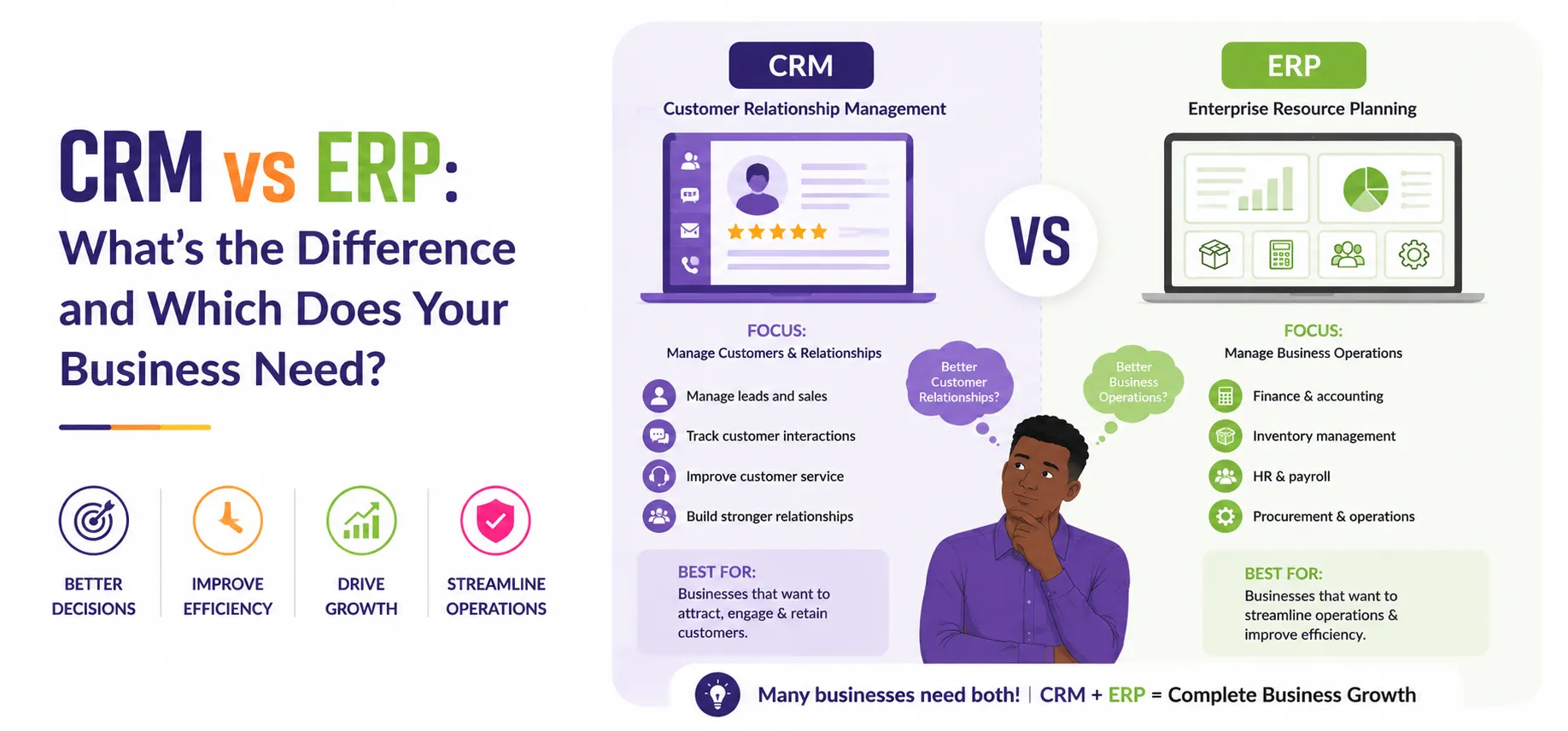
2026 isn't the year AI arrived in Kenya — it's the year it became genuinely affordable and practical for the average SME. The businesses gaining ground are pairing AI with the systems they already run on: M-Pesa, WhatsApp, and their core ERP or CRM.
At Timesten Technologies, we build the operational backbone — ERP, CRM, and payment integrations — that makes AI automation actually work in practice, not just in theory. If you're wondering where AI could realistically save your business time or money, we're happy to take a look at your current setup.
Get in touch: timestentechnologies.co.ke | WhatsApp: 0795 155 230
Other Blogs
Contact Us
Ready to take your business to the next level? Reach out to Timesten Technologies today. Whether you have a question, need more information about our services, or are ready to start a project, we're here to help. Connect with us, and let's discuss how we can work together to achieve your goals. Your success is just a message away!
our partners